


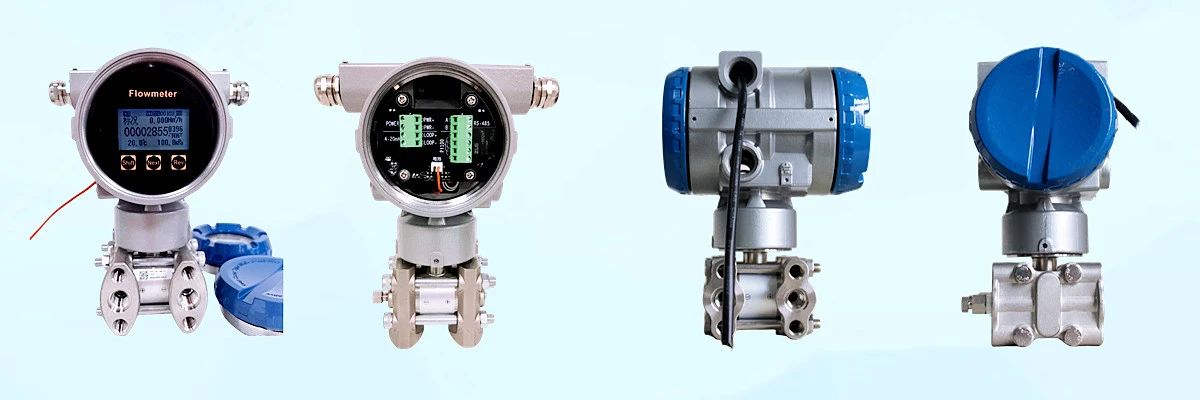
1. Clearly define the measurement medium and compensation requirements
Liquid: Generally, no temperature and pressure compensation is needed. Select the standard type.
Gas: It is necessary to choose the model with temperature and pressure compensation functions to automatically convert the working condition flow rate to the standard condition flow rate (standard cubic meters) through the gas state equation.
Steam: It is necessary to distinguish between saturated steam and superheated steam. Saturated steam usually selects pressure compensation; superheated steam must have both temperature and pressure compensation functions to accurately calculate the mass flow rate.
2.Calculate core measurement parameters
Differential pressure range: Based on the throttling device (such as orifice plate, V-shaped nozzle, etc.) and the maximum flow rate in the process, calculate the required maximum differential pressure value. Multi-parameter transmitters support micro-differential pressure measurement (such as 10Pa - 6000Pa), and it is necessary to ensure that the selected range covers the calculated differential pressure range.
Static pressure level: Confirm the working pressure of the pipeline and select a transmitter with a static pressure level that matches it (for example, some models can reach a maximum usage pressure of 40MPa).
Operating temperature: Confirm the temperature of the medium. If the temperature differs little from normal temperature (such as below 120℃), you can choose the model with a built-in temperature sensor; if the temperature is high or the temperature difference is large, then you must choose a temperature external type and connect a corresponding temperature probe to ensure accurate measurement.
3.Determine the accuracy and range ratio
Measurement accuracy: Select the appropriate accuracy level based on the process control requirements. Common levels include 0.5 class, 0.2 class, 0.1 class, 0.075 class,and even 0.05 class.
Range ratio: Multi-parameter transmitters have an extremely wide range ratio (such as 1:60, 1:100, 1:200, even 1:400). A wide range ratio means that the transmitter can maintain high accuracy even when there are significant fluctuations in flow. When selecting, it is necessary to confirm whether the actual minimum flow falls within this range ratio.
4. Confirm power supply and output signal mode
Power supply method: Depending on whether it is convenient to obtain power on-site, choose either pure built-in battery power supply (which can operate for 1-2 years without an external power source), internal battery/external 24V dual power supply, or internal rechargeable battery/solar dual power supply, etc.
Output signal: Confirm the remote transmission requirements. Optional outputs include 4-20mA current signal, pulse signal, or RS485 (Modbus-RTU) signal. Some models also support LORA or 4G wireless output. Note: If remote transmission output is required, an external 24V power supply is usually necessary.
5. Installation method and explosion-proof requirements
Installation direction: When placing an order, it is necessary to clearly specify whether it is to be installed horizontally or vertically. For horizontal installation, the pressure sensor is filled with silicone oil and is not affected by gravity; for vertical installation, the silicone oil is affected by gravity, which will cause a shift in the zero point. The manufacturer should conduct specialized calibration based on the installation direction to avoid "automatic digit movement" or flow measurement errors at the site.
Protection and explosion-proof: Confirm the protection level (such as IP65, suitable for outdoor installation) and explosion-proof level (such as ExdIICT4 explosion-proof design) according to the site environment.
Summary of Selection Suggestions
In actual operation, users only need to provide the manufacturer with a detailed process calculation document (including medium type, maximum/minimum flow rate, working pressure, working temperature, pipe diameter, etc.), and the manufacturer can then complete the calculation of differential pressure range, configuration of compensation algorithms, and parameter presetting based on this. High-quality multi-parameter transmitters have been debugged before leaving the factory, and after on-site installation, they usually do not require complex parameter settings and can be directly used.
Post time: Jun-24-2026